
Shopify’s Spring ‘26 release covers 150+ updates across sales, marketing, retail, and finance. Most of it has nothing to do with the code. This is the developer-relevant slice, organized by what each change actually touches: the CLI, the Dev Dashboard, checkout functions, extensions, themes, and the newer agentic/Catalog APIs.
Table of contents
Open Table of contents
- AI toolkit and agent access
- CLI, webhooks, and bulk operations
- Dev Dashboard
- APIs, metafields, and data
- Checkout, functions, and extensions
- Apps, auth, and security
- Themes and storefront
- POS and inventory, for developers
- Agentic commerce: Catalog API and Universal Commerce Protocol
- What this actually means if you’re building right now
AI toolkit and agent access
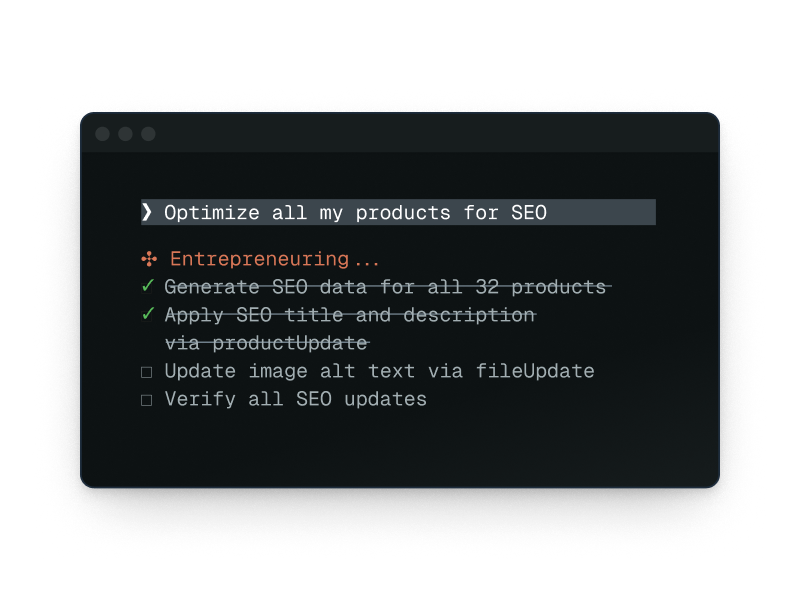
- Shopify AI Toolkit: build and manage storefronts, apps, and themes from Claude Code, Codex, Cursor, Hermes, and VS Code.
- Shopify Dev MCP, all API versions: accurate context and code validation across every supported API version, not just latest.
- Shopify Dev MCP, lower token usage: same accuracy, fewer tokens per response, same install path as above.
- Store management with agents: run your store inside Claude, ChatGPT, or Perplexity: add products, create collections, manage orders from the chat itself.
- Vibe-coding partners: describe a business and spin up a Shopify store through Manus, Replit, V0, or Lovable.
CLI, webhooks, and bulk operations
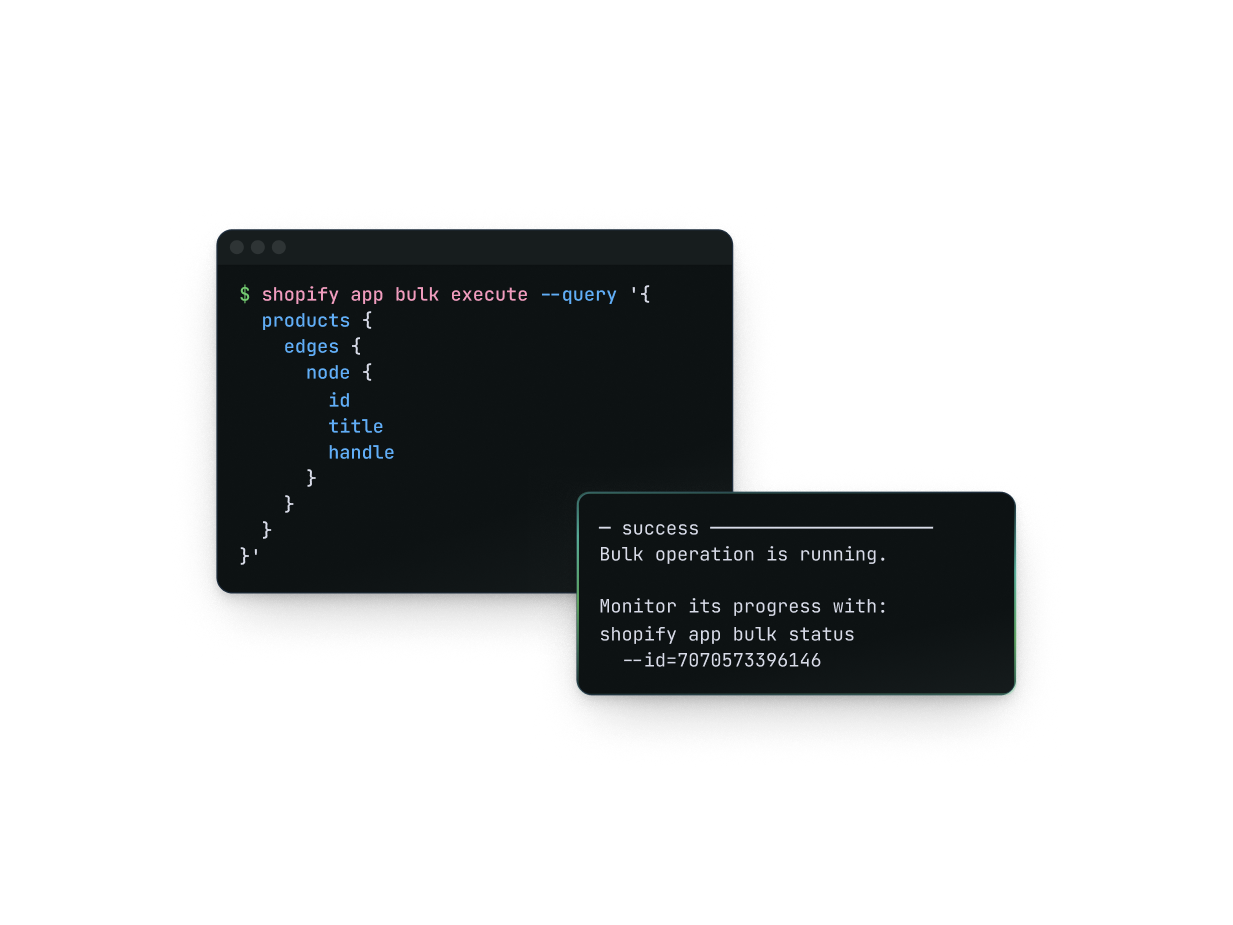
- GraphQL and bulk operations from the CLI: run queries and bulk ops from agents or your terminal with automatic auth and built-in status tracking.
- Parallel reads for bulk queries: bulk operations run up to 4x faster.
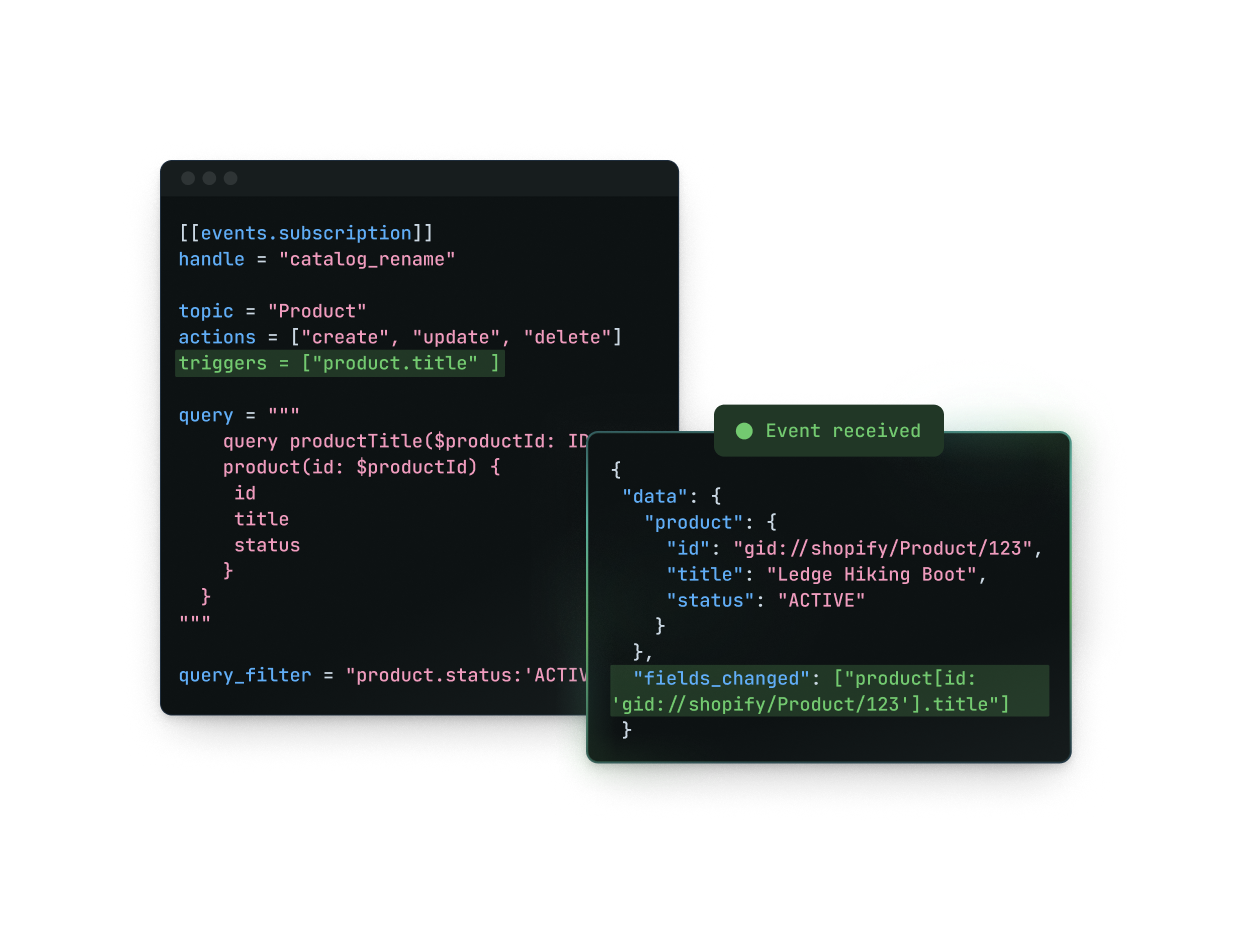
- Redesigned webhook architecture: triggers can fire only on specific field changes, and custom GraphQL queries return only the data you need instead of the full payload.
- Improved webhook monitoring: multi-select filters, faceted event counts, custom time ranges in the Dev Dashboard.
- Auto-upgrades and semantic versioning in Shopify CLI: minor and patch releases auto-upgrade; major versions need explicit opt-in.
- Safer app deployments: CI/CD pipelines can deploy new and updated extensions without silently deleting existing ones on live stores.
- App automation tokens: generate tokens directly in the Dev Dashboard to automate app releases in CI/CD.
Dev Dashboard
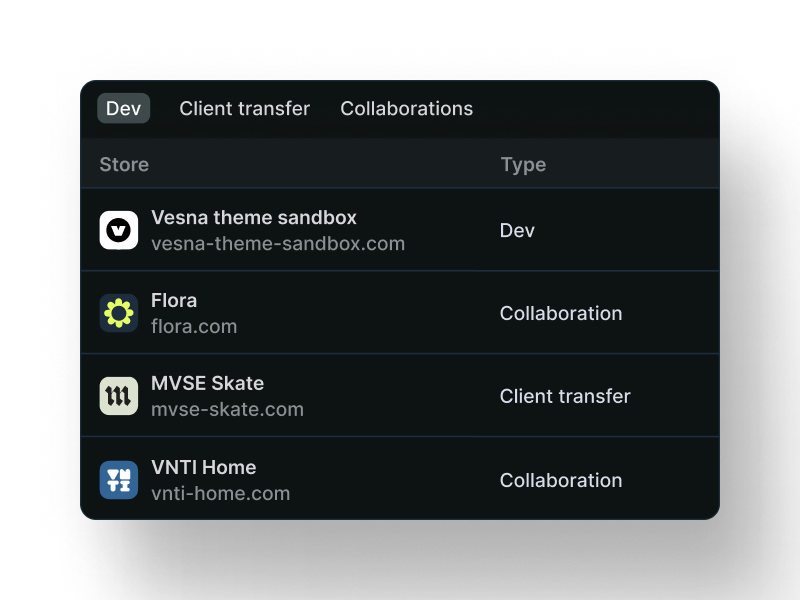
- All partner stores in one place: dev, client-transfer, and collaborator stores all live in the Dev Dashboard now.
- Localized Dev Dashboard: build apps and manage dev stores with UI and navigation in your own language.
- App Events API: send events from your app to Shopify, then monitor and manage its performance from the Dev Dashboard.
- Admin performance monitoring: check your app’s admin web vitals and Built for Shopify standing directly in the dashboard.
- Role-based access for partners: seven system roles plus custom ones for managing who on your team can do what.
- Streamlined app store submission: pre-submission checks in the Partner Dashboard, and review feedback tracked without email threads.
APIs, metafields, and data
- Streamlined Metafields and Metaobjects API: a simpler GraphQL API for reading and writing both.
- Declarative metaobjects don’t require scopes: app-owned metaobjects migrate cleanly once the app is installed, no scope negotiation.
- New Collections API: composable source groups, variant-level conditions, and exclusion rules, ahead of full rollout.
- Metafields in ShopifyQL: usable as dimensions and filters via dot-syntax in the Analytics API and online editor.
- Cart metafields carry over to orders: set
cartToOrderCopyableon an order metafield definition and cart values persist through to the order at checkout.
Checkout, functions, and extensions
- Metaobject data in checkout functions: pull metaobject entries into checkout functions for custom discounts, product rules, and personalized logic.
- Billing address and PO number in Shopify Functions: now queryable in cart and checkout validation functions, for compliance and B2B rules.
- Accelerated checkout support for add-ons: Shop Pay, Apple Pay, and other accelerated checkouts now support nested cart lines, so customers can buy add-ons straight from the product page.
- Discount configuration with admin UI extensions: extensions can manage discount classes and render conditional UI based on discount method.
- Prerequisites in product discount functions: a new field for specifying required prior purchases in BXGY discount functions.
- Bulk editing extensions for discounts: build extensions for bulk actions on the discount index.
- Shopify AI Toolkit for optimized checkout extensions: audit checkout UI extensions for performance and get concrete optimization suggestions.
- Migrate to Polaris web components with AI: upgrade checkout and customer account extensions to Polaris web components with your preferred agent.
- Refreshed branding API: one API for global branding settings plus page-specific overrides across checkout, accounts, and sign-in.
Apps, auth, and security
- Simple billing with Shopify App Pricing: configure usage, recurring, or hybrid pricing at submission; Shopify handles plan selection, charge approval, and invoicing.
- Stronger app security: public apps now use expiring tokens with OAuth 2.0-compliant refresh flows.
- Built for Shopify category requirement: apps in the returns and subscriptions categories must authenticate customers via the Customer Account API to keep BFS status.
- No backend required for lightweight apps: build an App Home directly in the admin without standing up or maintaining a backend server.
Themes and storefront
- Standard storefront events and actions: themes that adopt these let apps and AI agents interact with the site reliably instead of guessing at DOM structure.
- Color palettes for themes: a new customization architecture for palettes defined once in settings and available theme-wide.
- Customer account web component: a Shopify-managed component for sign-in and account menus without leaving the storefront.
- Pre-populate email on sign-in: the
login_hintparameter fills in the customer’s email when linking to the sign-in page. - Sign-in with Shop, for your own app: APIs, docs, and an SDK to let customers authenticate with Shop in one tap from inside a third-party app.
- Hydrogen, rebuilt: agent-first, built with Vercel, and no longer tied to a specific framework. It runs on Next.js too now.
POS and inventory, for developers
- POS UI extensions: activation status: query status alongside checkout, admin, customer account, and theme extensions in one place.
- POS UI extensions work offline: configure extensions to keep running when a device loses connectivity.
- Localized POS UI extensions: multi-language support with locale-aware currency, number formatting, and pluralization.
- Camera access for POS UI extensions: scan IDs, take product photos, and attach images directly from a POS extension.
- Inventory API idempotency: retried commands from network issues no longer risk duplicate writes.
- SKU sharing by default: the
permitsSkuSharingfield is gone; inventory can be stocked at multiple locations for any fulfillment service. - Multi-channel support for sales channel apps: a single app can now create multiple channel connections, each with its own specification.
Agentic commerce: Catalog API and Universal Commerce Protocol
This is the part of the release that’s actually new territory rather than an iteration, so it’s worth calling out separately from the rest.
- Universal Commerce Protocol: Catalog, Cart, and Checkout MCPs for building agentic shopping experiences from discovery through purchase.
- Catalog API: product lookup: retrieve real-time pricing and availability for up to 50 products in one request, by ID or URL.
- Catalog API: image search: agents can pass an image directly and get visually similar products back.
- Catalog API supports Shop sign-in: shoppers can connect their Shop account inside a Catalog-API-built experience.
- Sponsored products with Catalog API: earn revenue on sales made through agentic experiences (developer preview).
- Shopify Catalog structured data: product data gets standardized and enriched automatically; Shopify’s own numbers claim 2x conversion in AI chats from the syndicated data.
What this actually means if you’re building right now
If you only look at three things from this release: the Shopify Dev MCP changes affect anyone already running Claude Code, Codex, or Cursor against a Shopify project (better context, fewer tokens, no version mismatch). The checkout Functions additions (metaobjects, billing address, PO number) close real gaps if you’ve been working around missing fields with app-side hacks. And if you’re building anything for the AI-shopping surfaces, the Catalog API and Universal Commerce Protocol section is the one to read the actual dev docs for, not just this summary, since it’s the newest and least stable part of the stack.
Shopify revises these APIs and changelog entries faster than any summary can keep up with. Check the linked dev docs before shipping against any of it, especially the Catalog API and Universal Commerce Protocol pieces.